
cultural
Omed-omedan: Bali's kissing ritual the day after Nyepi
The day after total silence, one Denpasar village erupts into a water-soaked tug-of-war and kissing ritual. What Omed-omedan is, where it happens, and how to watch.
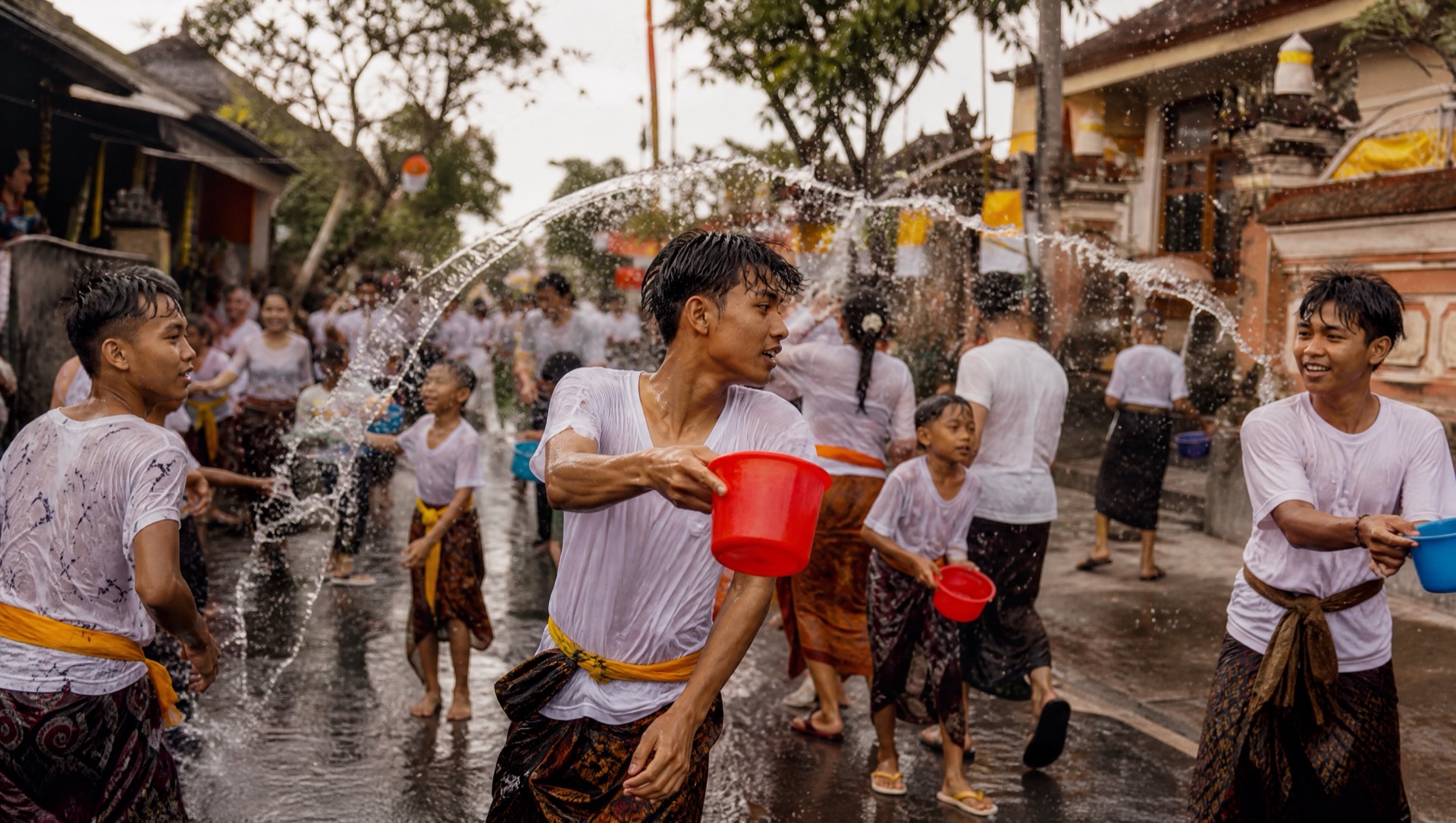
The morning after Nyepi, the island wakes up. And in one village in South Denpasar, it wakes up loud. Omed-omedan, the so-called Kissing Ritual, is held by the young people of Banjar Kaja in Sesetan on Ngembak Geni, the day after the Day of Silence. The name means “pull-pull”: groups of unmarried young men and women, cheered on by the whole neighbourhood, are pushed and pulled toward each other into an embrace, sometimes a kiss on the cheek, while the crowd drenches everyone with buckets of water. Gamelan plays, everyone laughs, and it goes on into the afternoon.
It is about a century old, tied to a legend of a sick village king who recovered when he heard the youth playing, and it is meant to bind the community in friendship and renewal. It is the joyful, soaking, chaotic mirror image of the silence that came the day before.
When and where
Omed-omedan happens on Ngembak Geni, the day after Nyepi, so it tracks the Saka calendar and moves each year. The next dates: 10 March 2027, then 27 March 2028. It runs in the afternoon, usually after communal prayers, and there is often a street parade and cultural programme (the Sesetan Heritage Omed-Omedan Festival) building up to the main ritual.
It happens in only one place on earth: Banjar Kaja, Sesetan, on Jalan Raya Sesetan in South Denpasar, about 3km from the city centre and a short drive from Sanur, Seminyak or Nusa Dua. Banjar Kaja, Sesetan.
How to enjoy it properly
Remember the airport is shut on Nyepi the day before, so you need to already be on the island. Build it into a Nyepi-week trip.
You can watch but not take part. The pulling and kissing is for the village’s own young people; foreigners are welcome as spectators, not participants. Stand with the crowd and enjoy the energy.
Expect to get wet. They throw a lot of water, and the splash zone is generous. Wear clothes you do not mind soaking and protect your phone and camera (a dry bag or a proper rain cover is smart).
Be respectful with photos. The atmosphere is light and friendly and photography is welcomed, but ask before close-up shots of individual participants, and do not turn a community ritual into a zoo.
Get there early for a spot. The lane fills up, and an elevated position at the edge gives you the best view over the crush.
The shot
This is a fast, wet, joyful event, so shoot for energy and expression.
The signature frame is the moment of the embrace under a sheet of thrown water, faces caught mid-laugh, the crowd a blur of colour around them. Freeze it with a fast shutter (1/500 or quicker) to catch the water droplets sharp in the air.
Work the faces. The expressions, shy, delighted, mortified, are the whole story. A tight frame on two participants and the splash beats any wide shot of the lane.
Protect your gear and accept you might take a hit; a rain cover or a weather-sealed body earns its keep here. A second, cheaper phone for the front-row splash zone is not a bad idea.
For Instagram: the hero is the airborne-water-plus-embrace frame, shot tight and fast, droplets frozen, expressions raw. Burst mode, high shutter, and get as close to the edge as the crowd allows without blocking anyone.
Sean’s take
Sean’s take: Omed-omedan is the perfect Bali contradiction: total silence one day, a soaking street party the next. It is genuinely fun and very local, and almost no visitors know it is on. If you are here for Nyepi, head to Sesetan the next afternoon, stand at the edge, protect your camera, and enjoy watching a whole neighbourhood lose its mind in the best way. Just do not try to join in.