
Field guide
When to visit Bali: seasons, crowds and the days the island shuts
Dry versus wet, the shoulder-season sweet spot, what the crowds and prices actually do month to month, and the one day a year the whole island closes.
Bali sits eight degrees south of the equator, so the temperature barely moves all year (roughly 26 to 32°C in the day). What changes is the rain, the crowds and the prices. Get the timing right and the same trip costs less and feels emptier.
What is the best time to visit Bali?
For the best balance of dry weather, manageable crowds and better room rates, visit Bali from May to June or from September to early October. July and August bring the most reliable sunshine but also the highest prices and heaviest traffic. Check the BMKG climate service before travel for current seasonal conditions.
Dry season: April to October. Cleaner skies, lower humidity, calmer seas, the best beach and boat conditions. This is also when everyone comes.
Wet season: November to March. Hot, humid, with short heavy downpours that usually clear, lush green everywhere, dramatic skies, and much cheaper rooms. The trade-offs are real: some roads flood, boat crossings to the islands get cancelled when the swell is up, and mosquito-borne dengue is more common, so use repellent in the evenings.
The sweet spot: May to June and September to early October. Shoulder season. You get most of the dry-season weather with a fraction of the crowds, and accommodation runs roughly 30 to 40 per cent cheaper than the July to August peak. For photographers and surfers this is the best value window on the calendar.
Peak: July to August, plus Christmas and New Year. Best weather of the year, and the most crowded and expensive by a wide margin. Villas in Canggu, Seminyak and Uluwatu book out months ahead. If you come in peak, book early and lean even harder on the early-morning traffic windows, because the roads are at their worst.
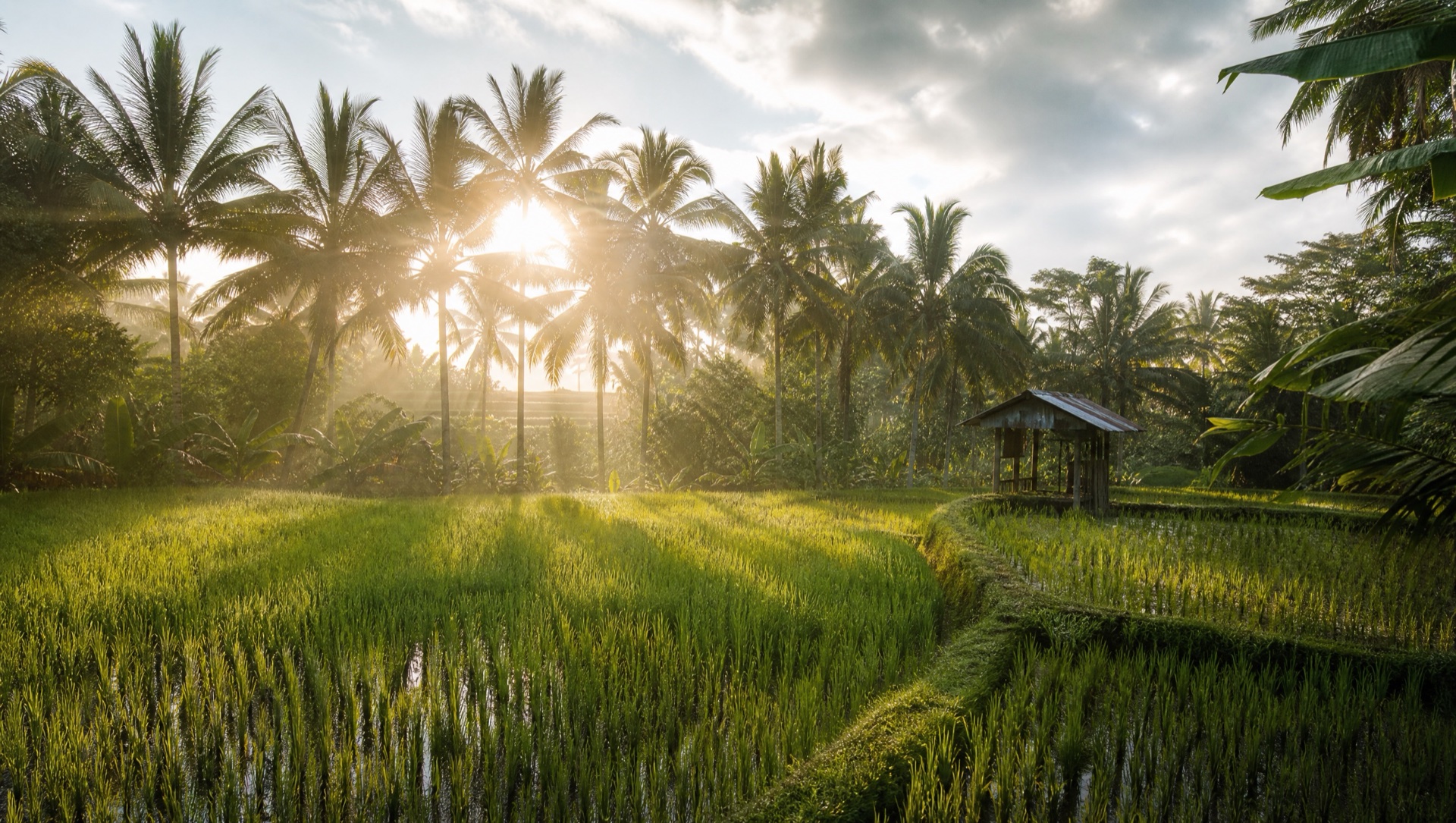
A note for shooters. Dry season gives you clean blue skies and reliable golden hours. Wet season gives you mist in the valleys, moody cloud, and the greenest rice fields of the year, plus far fewer people in your frame. Both are worth shooting. If you want the Ubud highlands and Sidemen valleys full of mist, the back end of the wet season is when you get it.
The one day the island stops: Nyepi
Nyepi, the Balinese Day of Silence, is unlike anything else you will experience as a traveller. For 24 hours the entire island shuts down. No flights in or out (the airport literally closes), no driving, no working, lights off after dark, and you stay inside your accommodation. In 2026 it fell on 19 March. The date shifts every year with the Balinese Saka calendar, so check the exact date for your year before you book, especially around flights. The night before brings the Ogoh-Ogoh parades, giant demon effigies carried through the streets, which are genuinely spectacular. If your trip overlaps Nyepi, treat it as a feature, not a problem: pick a villa with a pool and a view, stock up the day before, and enjoy the quietest 24 hours of your life.
For official holiday guidance, check the Bali Ministry of Religious Affairs and confirm airport operations with I Gusti Ngurah Rai Airport.
Worth timing around
The Bali Arts Festival runs from mid-June to mid-July in Denpasar, weeks of dance, gamelan and craft. If you care about Balinese culture rather than just the beach, it is worth building a day around.
For the full month-by-month breakdown, including Galungan and Kuningan, Melasti, Ogoh-Ogoh, Omed-omedan, the Bali Kite Festival and Perang Pandan, use the Bali events calendar. Dates move, so check the current year before you build flights around any ceremony.