
If someone asked me to choose my favourite time to be in Bali, I would choose June and July. The weather is usually fantastic, the mornings are clear, the evenings feel easier, and the island is at its best for getting outside before the roads become busy.
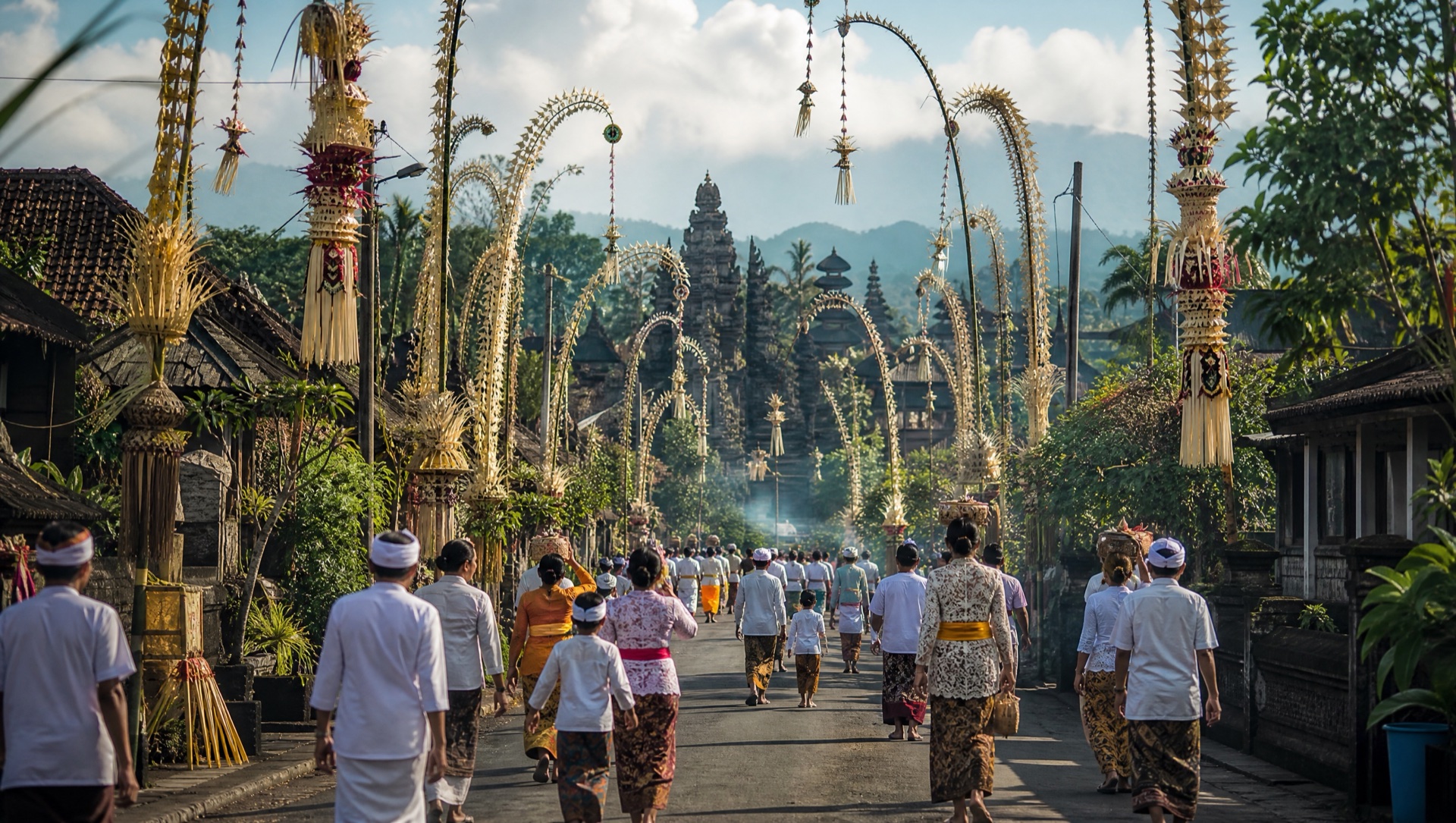
But weather is only part of the answer. In a year when Galungan and Kuningan fall across this period, as they did in June 2026, Bali takes on an entirely different atmosphere. Tall penjor rise outside homes, temples and businesses. They lean over the roads from both sides until an ordinary drive through a village feels like travelling beneath a ceremonial archway.
I drive these roads all the time, but during Galungan I still find myself slowing down simply to look. The streets can feel like a dream: bamboo curves above you, woven coconut-leaf decorations catch the light, offerings sit beneath family shrines, and everyone seems to be moving between homes and temples in ceremonial dress. It is stunningly beautiful, but it is not decoration put on for visitors. It is Bali living through one of the most important periods in its religious calendar.
The weather is Bali at its easiest
June and July sit inside Bali's dry season, which generally runs from around April into October. Temperatures remain tropical throughout the year, but the lower humidity, reduced rainfall and cooler mornings make these months much more comfortable for walking, driving, filming and spending full days outside.
June is the sweet spot for me. The dry-season pattern has usually settled in, but the heavier July and August visitor peak has not fully arrived. The island can still look green after the wet months, while the skies and roads are more dependable for planning.
July brings some of the year's most reliable sunshine and cleanest golden-hour light. It is excellent for beaches, clifftops, waterfalls and long photography days. The trade-off is that July is firmly high season: popular areas become busier, villas cost more, and traffic through Canggu, Seminyak, Uluwatu and the airport corridor can be punishing. Good weather does not make Bali's roads wider.
Seasonal patterns are never guarantees, particularly as weather becomes less predictable, so I still check the BMKG climate service before planning anything weather-dependent.
When the roads become part of the experience
A penjor is a tall, curved bamboo pole decorated with woven young coconut leaves and offerings from the land. Each household creates or commissions its own, so the detail changes from one gate to the next. The curve is commonly associated with Mount Agung, while the materials express gratitude for prosperity and the generosity of the earth.
Individually they are beautiful. Hundreds of them lining village streets are something else entirely. Around Ubud, Bangli, Sidemen and East Bali, the roads themselves become one of the best experiences on the island. You do not need a ticket or a famous viewpoint. You can simply take a slow drive through the villages and let the landscape unfold.
Penglipuran is the obvious photographic destination because its symmetrical village street becomes an extraordinary corridor of penjor. I also love the less planned version: turning onto an ordinary lane outside Ubud and finding both sides bending towards each other above the road, with scooters, dogs and everyday village life continuing underneath.
An important calendar detail
Galungan and Kuningan do not fall in June and July every year. They follow Bali's 210-day Pawukon calendar, rather than the Gregorian calendar used for ordinary travel dates. Galungan marks the victory of dharma over adharma and the return of ancestral spirits to family homes. Kuningan comes ten days later and marks the conclusion of the period.
In 2026, Galungan fell on 17 June and Kuningan on 27 June, which is why this particular early dry season felt so special. The dates move through the Gregorian year, so check the current calendar rather than booking a future June trip and assuming the penjor will be there. I keep the upcoming dates and practical visiting guidance on the Galungan and Kuningan page.
There is more happening than Galungan
June and July also bring one of the strongest cultural programmes of the year. The Bali Arts Festival, or Pesta Kesenian Bali, runs roughly from mid-June to mid-July in Denpasar. In 2026 it ran from 13 June to 11 July. It brings together dance, gamelan, theatre, textiles, carving and ceremonial arts from across Bali's regencies, much of it made for a Balinese audience rather than packaged as a tourist performance.
If you are here during the festival, choose an evening programme and go to the Bali Arts Festival rather than only watching a condensed dinner show. The standard is extraordinary, and seeing local families fill the grounds is part of the experience.
July is also kite season. As the dry-season winds strengthen, giant traditional kites begin appearing above beaches and fields, especially around Sanur and Padang Galak. The major competition dates can move with the wind and local calendar, but the broader Bali Kite Festival season adds another layer of colour and energy.
It is my favourite light for photography
For photography and film, these months are wonderfully dependable. Early starts bring clear skies and long, soft shadows. Penjor decorations glow when backlit because the woven leaves catch the low sun, and the repeating curves create natural leading lines along a road.
The best pictures are not necessarily at a major ceremony. I prefer the contrast of something ceremonial with ordinary life: a family passing beneath the penjor, a scooter under a huge bamboo curve, or morning light hitting an old stone gate. It shows that this is a living culture, not a set.
Respect matters more than the photograph. Galungan morning is family and prayer time. Wear a sarong and sash when entering a temple, stay behind people who are praying, do not block processions, and ask before making close portraits. A long lens and a little distance are often the better choice.
The honest trade-offs
June and July are not empty months. June is usually the more balanced choice; July is busier and more expensive. By late July, popular villas and resorts can be full, restaurant bookings become worthwhile, and short drives can take much longer than the map suggests.
I would book accommodation early, stay within the region I actually want to explore, and start important drives before 8am. Trying to cross the island every day wastes the best weather from inside a car.
There can also be ceremony traffic, temporary road congestion and businesses operating differently while families observe religious days. Treat that as part of being in Bali at an important time, not as an inconvenience staged in the way of a holiday.
How I would plan the trip
If I were planning a June or July visit, I would base at least part of it around Ubud or the villages to the east, begin most days early, and leave room for unplanned drives. I would add one evening at the Arts Festival if the dates aligned, a sunrise or early-morning photography drive, and a Sanur morning during kite season.
Most importantly, I would check the ceremony calendar. June and July already have some of Bali's best weather, but when Galungan and Kuningan land in the same window, the combination is exceptional. You get the dry-season light, the cooler air, the cultural programme and an island covered in penjor.
That is Bali at its most visually beautiful to me. Even a routine drive can feel extraordinary—and after years of travelling these roads, that still has the power to stop me.