
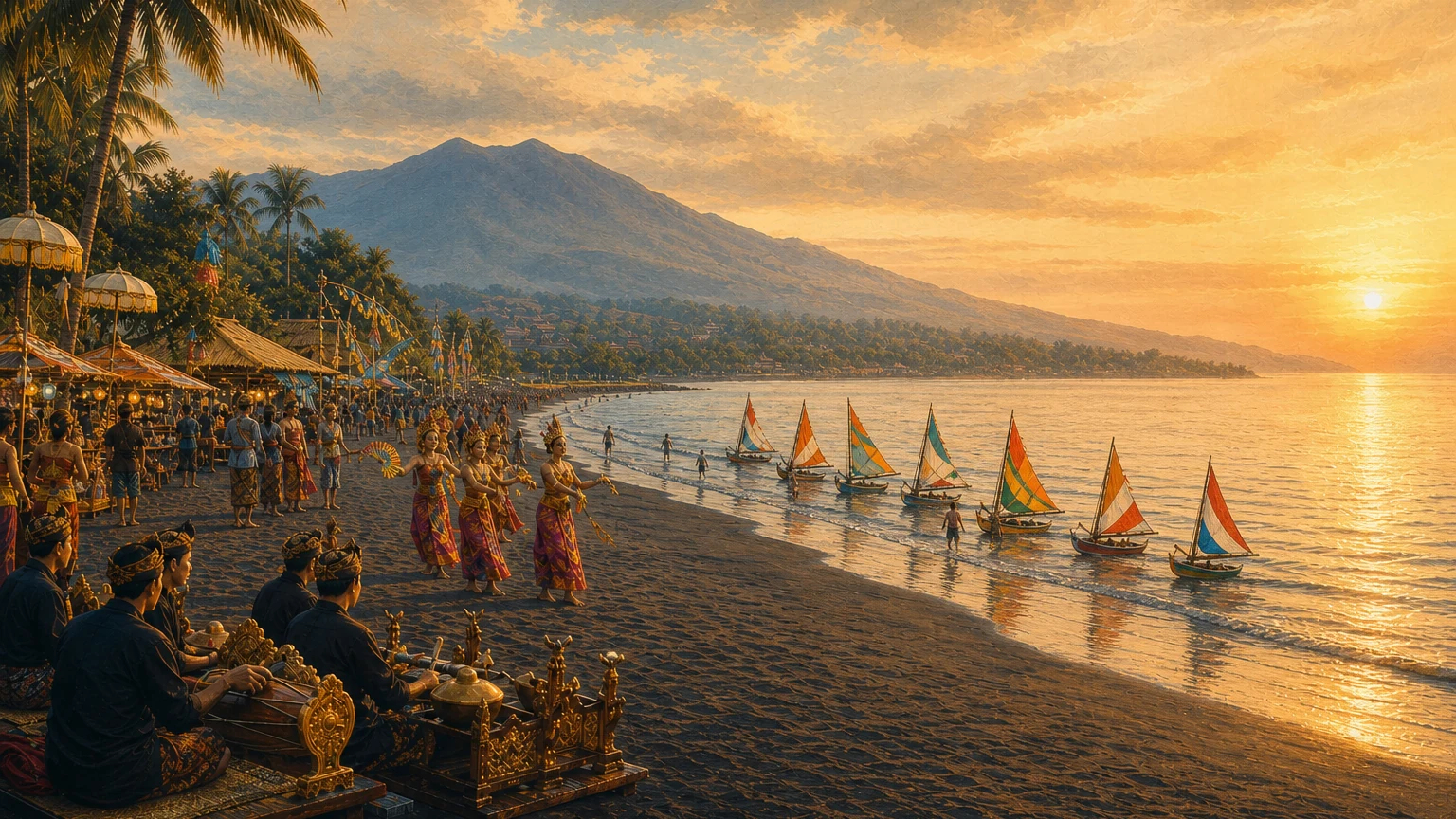
Lovina Festival is under way on Bali’s north coast, with five days of traditional performance, maritime events, live music and local food running until Tuesday, 28 July.
The facts
Lovina Festival opened on Friday, 24 July at Lovina Beach in Buleleng. This is the festival’s 12th edition and its 2026 theme is “Theatre of Dolphins”, a reference to the animal that has become Lovina’s best-known symbol.
The current official programme runs from 24 to 28 July across two beachfront areas.
Tasik Madu, about 400 metres west of the dolphin statue, carries the festival’s contemporary programme. Expect traditional dance presented alongside live bands, sunset DJ sessions and food and hospitality businesses from around Lovina.
Binaria Beach, beside the dolphin statue, becomes the main cultural and creative-economy area from 26 July. Its programme includes Buleleng dance, music, local food, handicrafts and performances by North Bali artists.
Organisers say around 80 local small businesses are appearing in the official festival zones. Earlier government reporting placed the number of curated businesses at 82, covering local food, crafts and other products.
The wider programme reaches beyond the two stages. Events include miniature traditional sailboat racing, the Lovina Cross Country run, sunset yoga, creative-economy workshops and Sapi Gerumbungan.
Sapi Gerumbungan is one of the most distinctive parts of the programme. This Buleleng tradition features decorated cattle and their handlers competing at Kaliasem Field. It is scheduled for 4pm on Monday, 27 July.
Lovina Festival is also included in Indonesia’s 2026 Kharisma Event Nusantara calendar, a national programme highlighting selected cultural and tourism events across the country.
What is still happening
If you are already in North Bali, there are several major events remaining.
Saturday, 25 July
Traditional miniature sailboats are scheduled from 9am, followed by the afternoon and evening programme at Tasik Madu. The stage programme includes a sunset DJ and Barong Nglawang performance, traditional Balinese music, Magrumbungan dance and live bands.
Sunday, 26 July
The Lovina Cross Country starts at 5am, followed by a second morning of miniature sailboat racing from 9am.
Tasik Madu continues with music and cultural programming from the afternoon. Binaria Beach also opens its stage programme, beginning with a fashion show and continuing with Bondres comedy, local music and other performances.
Monday, 27 July
A creative-economy workshop begins at 9am. The Sapi Gerumbungan competition is scheduled for 4pm at Kaliasem Field.
Back at Binaria Beach, sunset yoga begins at 5.30pm. The evening programme includes percussion, dance, Barong, Dalang Bondres and live music from Jun Bintang.
Tuesday, 28 July
The closing night takes place at Binaria Beach. The programme includes the Vatsalya Janmabhumi theatrical production, D’Vacto Band and Buleleng rock band Lolot.
Some earlier media reports listed the festival as continuing until 29 July. The current official Lovina Festival programme and the latest Buleleng tourism announcement both list 28 July as the closing date. Check the festival’s official channels before travelling in case the programme changes.
What it means for your trip
Lovina Festival gives travellers a reason to treat North Bali as more than a quick dolphin-tour stop.
The strongest visual opportunities are spread across the day. The miniature sailboats and cross-country event happen in the morning. Cultural performances, beachfront activity and local food build through the afternoon. Stage lighting, dance and music take over after sunset.
For photographers, that creates a more varied story than one headline performance. The coastline, fishing culture, decorated Sapi Gerumbungan teams, traditional costume, musicians and local businesses all show different sides of Buleleng.
It is also likely to be busy around central Lovina. The Buleleng administration has prepared ten designated parking areas across the festival precinct and security teams at 14 strategic points. Allow extra time around Kalibukbuk, Kaliasem and the dolphin statue, particularly before the evening performances.
Do not assume you will be able to drive directly to the beachfront stage and find parking nearby. Check the current venue information, arrive early and be prepared to walk from one of the designated parking areas.
The programme is split between two zones, so confirm which stage is hosting the event you want to see. Tasik Madu and Binaria Beach are close enough to sit within the same Lovina precinct, but they have different schedules and atmospheres.
Why Lovina feels different during the festival
Many visitors still experience North Bali through a single early-morning activity before moving on. Lovina Festival presents a broader picture.
This is a coastal community with its own performance traditions, food, music and relationship with the sea. The miniature sailboats make that maritime identity visible. Sapi Gerumbungan brings a rural Buleleng tradition into the programme. The two festival stages place local culture beside contemporary music rather than treating the two as separate worlds.
That depth also makes the event useful for anyone planning a photography-led trip. South Bali’s major events often attract dense crowds and immediate social-media coverage. Lovina offers a different visual setting, with black-sand coastline, open sea, fishing boats and Buleleng traditions forming the backdrop.
Sean’s on-the-ground line
The practical approach is to choose one or two events rather than trying to cover everything. Build the day around the light and the location. A morning maritime event and an evening cultural programme will tell a stronger story than rushing between every item on the schedule.
If Lovina Festival is part of a wider North Bali trip, keep enough time for the region beyond the beach. Several of Bali’s most dramatic waterfalls are in Buleleng, including Banyumala and Sekumpul, but travel times through the mountains can be longer than they appear on a map.
Explore the Bali Shortlist waterfall guides.