
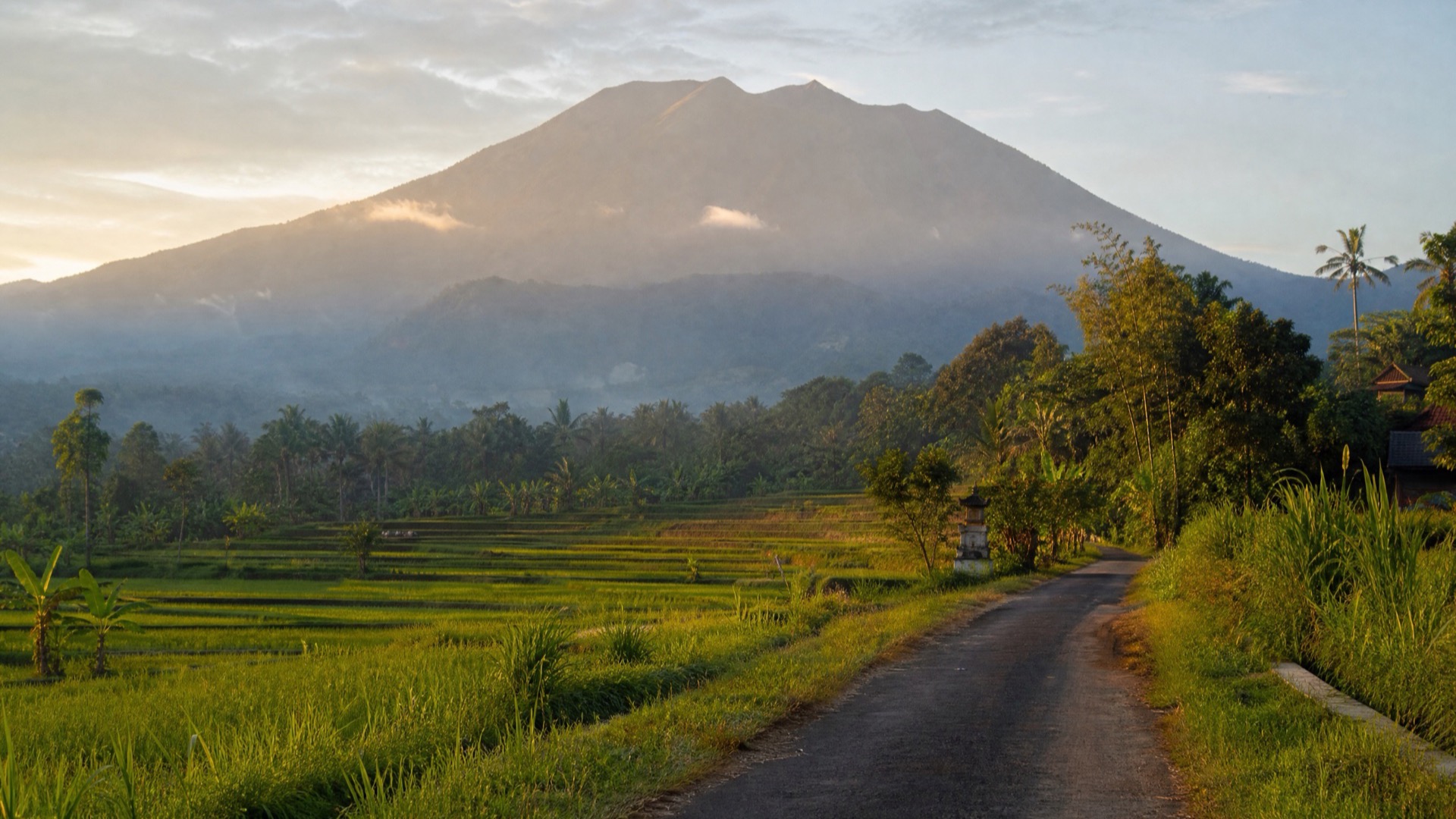
The best way to see more of Bali may be to stop trying to see all of it.
Most Bali itineraries begin with a list. Uluwatu Temple. A beach club. Nusa Penida. Tegallalang. A waterfall. Mount Batur. Seminyak. Each place looks close enough on a screen, so another pin gets added until the holiday becomes an operation: alarms, check-outs, drivers waiting, meals rushed and sunsets watched with one eye on the next booking.
Slow travel starts with a different question. Instead of asking, “How much can I fit in?”, ask, “What would this part of Bali feel like if I gave it enough time?”
A recent Bali Sun article makes a good case for longer stays, local knowledge, community spending and treating the journey as part of the experience. I agree with the direction. Where I would be more careful is the language of “hidden gems” and “secret spots”. Slow travel is not another method for collecting locations before everyone else finds them. It is learning to notice the place you are already in.
Slow travel is not doing nothing
Slow does not have to mean a month in one villa or entire days beside a pool. It means removing unnecessary movement so the experiences you choose have room to become memorable.
You can still hike, dive, visit temples, photograph waterfalls and eat extremely well. The difference is that you choose one meaningful anchor for the day and build around its region. You are not leaving Sidemen at dawn for Uluwatu, crossing back to Ubud for dinner and calling the exhaustion an adventure.
My basic version of slow travel in Bali is:
Stay four or five nights in a region before moving. A longer base lets you learn the nearby roads, return to a good warung, adjust for weather and stop treating every drive as a once-only mission.
Plan one anchor experience per day. A guided walk, museum, cooking class, waterfall, dive or temple route can be the day. The café afterwards, the village road and the unexpected conversation are not wasted time around it.
Start early, then leave the afternoon loose. Bali is usually calmer in the morning. Early starts offer cooler air, gentler light and fewer vehicles. Keeping the second half of the day flexible means a good experience can run long without destroying three reservations.
Let local knowledge change the plan. Ask your host, driver or guide what makes sense that day. A ceremony, road closure, recent rain or sea condition can matter more than a saved itinerary.
Spend close to where you stay. Use locally run accommodation where it suits you, eat in local restaurants and warungs, and hire local guides or drivers. Slow travel can keep more of each day—and more of its spending—inside one community.
The “secret spot” problem
Bali does not need every quiet path turned into a geotag. A place can be beautiful precisely because it is an ordinary farming track, a working village or a stretch of coast that has not been designed to process crowds.
If a resident or guide takes you somewhere sensitive, ask before publishing the exact location. Do not walk into active rice fields for a better angle, fly a drone over homes or ceremonies, or treat a family compound as a set. Buy something when a small community maintains access, use the local guide where one is expected, and take your rubbish with you.
The best slow-travel discovery may be a place you never post. It may also be something too ordinary to appear in a “top ten”: the same fruit seller recognising you on the third morning, a driver explaining why a road is busy, or learning when the light reaches a rice terrace outside your room.
Three Bali bases that reward more time
These are not minute-by-minute itineraries. They are structures designed to give a region room.
1. Ubud and the villages around it — five nights
Ubud works when you resist using it as a launchpad for the entire island. Stay close enough to walk to meals or choose a quieter village base with easy access to town. Give central Ubud one morning rather than dipping into it between two distant attractions.
Use one day for a guided cultural or historical walk. Give another to a single landscape route—perhaps a rice-terrace area, temple or waterfall that fits naturally with your base. Keep a third day for a cooking, craft or wellness experience, and protect at least one morning with no booking at all.
If you want a more structured regenerative experience, Astungkara Way operates trails and farm experiences through living rice landscapes. Its published approach links walking with regenerative farming and work alongside Balinese farmers. Check the current trail, meeting point and physical requirements directly rather than assuming every experience starts in Ubud.
The Ubud mistake is trying to combine town, Kintamani, three waterfalls, East Bali and the coast simply because all are reachable. Reachable is not the same as enjoyable.
2. Sidemen and East Bali — six nights
East Bali should be a destination, not a long day trip squeezed between breakfast and a beach-club booking. Sidemen gives you valley roads, rice fields, village life and changing views of Mount Agung. Staying several nights means you can wait for clear weather rather than treating one cloudy morning as your only chance.
Begin with a quiet arrival day. Take a guided walk rather than wandering through working fields uninvited. Give one day to a carefully grouped Karangasem route and another to a single cultural experience.
Samsara Living Museum in Karangasem describes itself as a living museum centred on Balinese life, inherited cultural values and community. Its current activities include museum visits, cooking and arak-making, offering-making, dance, music and local culinary experiences. Choose one or two activities and give them time instead of treating the museum as a photo stop.
If you continue to Amed, make it a second proper base rather than a return dash from elsewhere. Stay for the coast, diving or snorkelling, early mornings and the villages—not simply one famous viewpoint.
3. Munduk and the northern highlands — four nights
Munduk suits travellers who want cooler air, waterfalls, plantation landscapes and quieter evenings. Four nights gives you time to walk one waterfall route, explore the lake country on a separate day and still have weather margin.
Do not combine every North Bali waterfall into a single heroic circuit. Choose a route that fits your ability and recent conditions, use a local guide where appropriate, and expect wet or slippery ground even when the south of Bali feels dry.
The highlands are also a good place to understand how dramatically Bali changes with elevation. Give yourself time for cloud, rain and mist. They are part of the landscape, not evidence that the day has failed.
How to make any Bali itinerary slower
Remove one accommodation change. Moving hotels costs more than the drive. It also means packing, check-out, luggage storage, waiting and learning a new area.
Cut the daily pin count in half. If six saved places look possible, choose three. If three lie in different regions, choose one.
Plan around roads, not straight-line distance. Bali traffic, ceremonies, school runs and narrow village streets can turn a short distance into a substantial commitment. My four-day Bali guide explains why region-first planning matters even more on a short visit.
Use a driver strategically. A trusted local driver is valuable for an early regional route, luggage transfer or places where parking is difficult. That does not mean sitting in a car every day. Walk where it is safe and practical, and use boats or scooters only when the conditions, licensing, experience and insurance make sense.
Do not book every meal. Reserve the one restaurant that matters. Leave room to return somewhere good or follow a local recommendation.
Build in weather margin. Waterfalls, volcano views, diving and boat travel are all affected by conditions. A slower itinerary can move an experience to another morning instead of forcing it when the weather is wrong.
Is slow travel automatically sustainable?
No. A long stay can still be wasteful, disrespectful or disconnected from the community. Calling an itinerary “slow” does not neutralise flights, guarantee that money stays local or make every activity regenerative.
But staying longer in fewer places can reduce repeated transfers, make local businesses easier to support and create time for more thoughtful choices. The difference comes from behaviour: where you stay, who you hire, how you use water and energy, how you treat sacred and working spaces, and whether the community receives anything meaningful from your visit.
The part of Bali you cannot schedule
The Bali moments I remember best rarely began with a famous pin. They came from taking the same road often enough to notice it changing, stopping because the light looked good, or having enough time to accept an invitation instead of rushing to the next booking.
That is the real promise of slow travel. It does not reveal a secret version of Bali reserved for clever travellers. It gives you enough attention to see the island that was there all along.
Choose one region. Stay a little longer. Plan one important thing, then let the day breathe. Bali does not need to be conquered to be unforgettable.
Sources and further reading
- The Bali Sun — Slow Travel Itineraries in Bali, published 19 July 2026.
- Astungkara Way — official information on its trails, regenerative farming and farm experiences.
- Samsara Living Museum — official visitor and activity information.